Coastal teal bed styling creates a calm bedroom
Coastal teal bed styling anchors a calm bedroom with sea-washed light and quiet texture.
 Save
Save
We set out to test how coastal teal can transform a bedroom into a quiet, restorative space, pairing linen textures with driftwood accents and tactful lighting. The aim is to report the practical steps that deliver calm without fuss.
What you'll need
- linen duvet cover
- soft, breathable fabric in a pale teal/blue that reads as restful and reflects light softly.
- driftwood pendant lamp
- a natural, sculptural piece that adds coastal character without glare.
- teal velvet cushion
- a restrained pop of colour that deepens the bed's focal point without overwhelming the palette.
- reinforced oak bed frame
- solid, warm timber with visible grain to anchor the scheme and endure daily wear.
We arrived at a compact south-facing flat where daylight spills across a pale oak floor and settles into a calm rhythm. The project was straightforward in scope: styling a bedding-led bedroom with coastal teal as the quiet anchor. We measured the room, noted the bed orientation, and mapped how textiles, light, and timber could work together without crowding the space. Our starting palette was restrained—sage greens, soft whites, and the merest whisper of teal—so the bed could claim rather than shout. We built the arrangement around a simple, breathable fabric base and elevated it with natural textures rather than competing colour. The goal was to test how a calm, layered approach might translate into daily ease for a bedroom used by two. By the end of the day we had a practical plan, a short shopping list, and a sense of quiet progress.
Coastal teal bed setup
We began by positioning a king-size bed along the longer wall to maintain generous floor access and to reflect light from the single coastal window. The bed was dressed in a linen duvet with a subtle texture that catches sun without glare, and it set the tonal base for the scheme. A washable cotton mattress protector keeps maintenance straightforward, aligning with our slow-living ethos. We kept the headboard simple, allowing the teal accents to appear softer when framed by daylight and by the white walls. In this first pass, the focus was on scale, proportion, and the way natural fibres feel under hands and eyes.
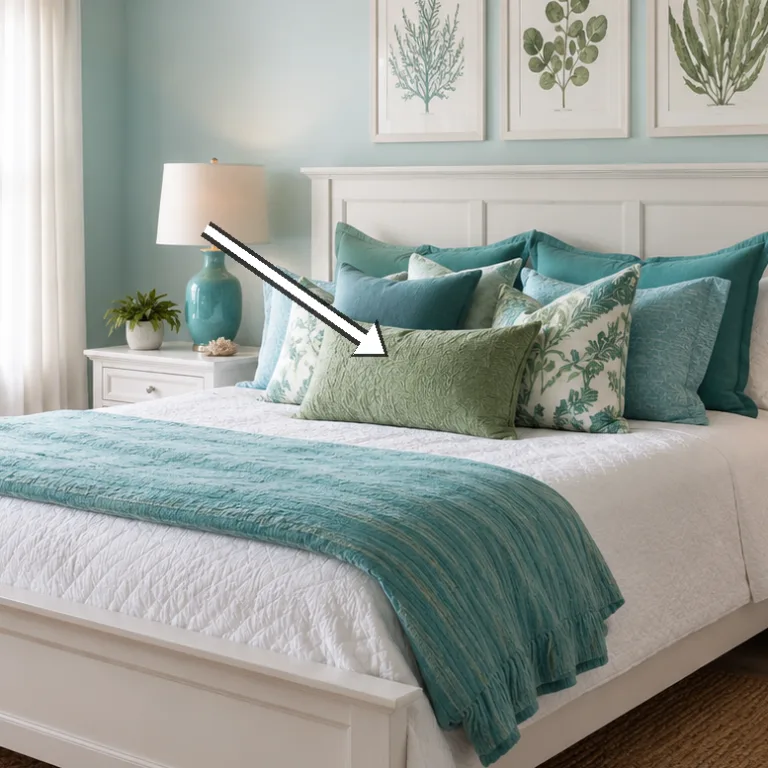
We layered a midweight wool throw at the foot of the bed to introduce warmth without heavy colour. Teal cushions in velvet and brushed linen provide a quiet gradient, avoiding a hard block of hue. A cotton sateen sheet set adds a slight sheen that modulates the light, keeping the teal from appearing too solid. Driftwood bedside lamps offer tactile contrast and a soft, amber glow as evenings lengthen. We selected a reclaimed oak bedside table to ground the arrangement with texture and a natural scent.
We tested sheer curtains to soften the window frame and extend the cool daylight into a gentle morning warmth. There was a conscious effort to keep surface clutter to a minimum, so the eye could rest on fabric, grain, and light. The result felt cohesive rather than conflicting, with teal elevated by whitespace and the warmth of wood. In practice, this meant the room breathes; every item has a reason, every surface a deliberate pause. We also considered how the bed would read when made versus unmade, to ensure calm remains regardless.
Texture and light in teal bedroom
 Save
Save
For the second pass we explored texture as the engine of calm, not more paint. We swapped a glossy cushion for a matte teal weave that tames the brightness and invites touch. A flax-blend throw with a tighter weave created a subtle stripe that reads as fabric rather than pattern. Rattan blinds were trimmed to diffuse strong sun, producing filtered daylight that flatters the teal and the timber. This shift from gloss to matte enabled the teal to feel serene rather than electric.
We assessed lighting layers, balancing ceiling, task, and decorative light to prevent glare while maintaining legibility. The ceiling fixture was swapped for a shallow drum in pale linen to distribute warmth evenly. Table lamps on each side of the bed were set at lower wattage, so shadows helped texture rather than fought it. A small pendant over the reading chair collected daylight and offered a focal point that did not compete with the bed. We kept cables discreet and wired fixtures with fabric-covered leads to sustain the calm, undistracted horizon.
We then tested distance: two small cushions helped the bed feel anchored without encroaching on the margins. The idea was to keep negative space at both sides of the bed, so the teal could breathe. We measured that bedside open space should be at least 60 centimetres to avoid crowding the legs when sitting. With this discipline, the room breathes and every movement through it feels considered. The practice paid off when moving through the space, noting how the eyes settle rather than jump.
Calm durability and fabrics
We focused on durability because a calm bedroom must withstand daily life without losing its character. We chose a linen duvet in a pale teal that feels breathable and ages gracefully, with little risk of pilling. The velvet cushion, while luxurious, was selected for durability and easy vacuuming between seasons. Washing rules were defined: linen at 40 degrees, air-dry, and a gentle iron to preserve the texture. These practicalities mattered because a calm bedroom should endure the rhythms of real life.
 Save
Save
We tested the bed’s tactile contrast by alternating the feel of wood, wool, and smooth cotton. The wooden nightstand is rough-cut enough to register under fingertips and soft enough not to shout. The drapes softened the view while their weight helped the teal appear more grounded. We paid attention to the seam allowances on the linen to avoid visible fraying that could disrupt the calm. In sum, durability guided the aesthetic so the scheme would outlive fads.
We closed the loop by inviting a sense of ritual: a nightly swap of pillow position to prompt mindful movement. The routine is intentionally short and repeatable, reinforcing serenity rather than temptation. Small, well-made objects that age well become the room’s quiet vocabulary. Even the teal cushions provide a soft touchstone of memory when returning to the space after busy days. We recommend keeping one cherished piece as a daily cue for calm, not an ornament to dust.
“The room feels as if the sea paused here, then stepped back.” — Mira
Coastal accents and accessories
We kept accessories deliberately modest: a pair of cerused oak frames, a ceramic jar, and a small coastal sculpture. Each object was chosen for tactility and for echoing the teal without stealing focus from the bed. We avoided loud patterns in favour of gentle texture, so the eye rests on the bed first and the room second. The ceramic jar acts as a calm destination for a watchful hand before sleep. We placed the pieces where hands naturally fall when sitting up, reinforcing the room’s practical use.
Texture, grain, and bead-like details became the language of the room rather than bold colour statements. The author’s habit of testing with real objects helped us gauge durability and warmth. We checked that the shelving did not compete with the bed’s line, instead reinforcing its length. Natural fabrics like jute and wool were used sparingly to avoid overpowering the teal. A sense of history emerged from simple pieces that age gracefully with regular care.
 Save
Save
We documented measurements to ensure the layout would work even when the bed is made and clutter is cleared. The result was a coherent rhythm: light, texture, and space all moving in parallel. We tested cleaning routines to keep the fabric colours from fading, and we noted the ease of refreshing the space with fresh linen. The approach remained economy-minded, avoiding conspicuous purchases that would date the look. In practice, the teal persisted through the day’s changes from morning sun to evening shadow.
- One small focal point at the head of the bed
- Two or three layers of textiles for warmth
- Hidden storage to keep surfaces clear
- Soft, inclusive lighting to wash surfaces evenly
- Simple, durable materials to age gracefully
Practical rituals for maintenance
As a final pass we documented practical rituals that keep the room calm across seasons. We noted the care routines for linen, timber, and lamp finishes to preserve texture. Weekly airing of linen and a quick vacuum of the wool throw maintain lightness and prevent dust. Seasonal assessment of the teal colour ensures it does not drift toward blue or grey in poor light. The aim is a bedroom that remains restful with minimal effort and predictable upkeep.
We tested the bed-making routine, noting that a simple fade of the sheet layers reads as deliberate calm. A nightly return to the room is smoother when surfaces are tidy and undisturbed. We kept a small stock of spare textiles in a box under the bed for easy rotation. The space rewards patience: as fabrics age, the colour deepens and the texture softens. The process itself becomes part of the calm, a small daily ritual.
Finally we reflected on what the teal triangle achieved: a quiet, honest bedroom that supports sleep. The balance between material warmth and colour restraint reduces visual noise and invites longer rests. We left the room with a clear list of adjustments that are affordable and repeatable. If you replicate this approach, start with a calm base and add colour as a single accent rather than a flood. In time, the teal becomes weathered and familiar, like a shoreline you choose to visit often.
How to do it
Audit the room's light and scale
Measure daylight hours and how it shifts across the room; adjust textiles and furniture to preserve calm through the day.
Choose a restrained teal base
Pick a teal that leans blue-green, then build the palette with whites, linen, and light woods.
Layer fabrics with intent
Alternate textures—linen, wool, velvet—to create depth without competing hue.
Set practical routines
Document simple care and daily habits that keep the space calm over time.
Common mistakes to avoid
Overloading with colour
A common error is adding too many teal hues or pairing teal with several competing blues. This creates visual fatigue and makes the scheme feel busy rather than calm.
Ignoring textiles
Neglecting texture leads to a flat room. Without layering—linen, wool, and matte finishes—the palette can feel clinical and cold rather than soft and inviting.
Skimping on lighting
Relying on one overhead light makes the teal appear flat and the space unwelcoming at dusk. A layered, warm lighting plan preserves mood and readability.
Frequently asked
What makes teal calming in a bedroom?
How do you keep teal from overpowering a space?
What fabrics work best with coastal teal?
How do you maintain such a look daily?
What is the role of lighting in this styling?
Can this styling work in small bedrooms?
How do I choose textiles within budget?
What is the one non-negotiable in coastal teal styling?
In closing
In closing, the exercise reminded us that calm is a result of restraint, seasonality, and honest materials. The teal reads as a memory of the sea rather than a banner of trend. When the room breathes, day-to-day life feels simpler and easier to maintain. We leave with a clear sense that slow-living interiors are earned through thoughtful choices rather than constant reinvention. The bed becomes a quiet anchor, not a stage set.
Enjoyed this? Get the next one by email.
One gentle note when we publish something worth your time. No noise, unsubscribe anytime.
More to love

Plant-led calm in a mint-green bedroom
Plant-led calm unfolds in a mint-green bedroom where foliage steadies the pace and daylight does most of the work. We map texture, scale and routine as preventative care for rest, not design vanity.